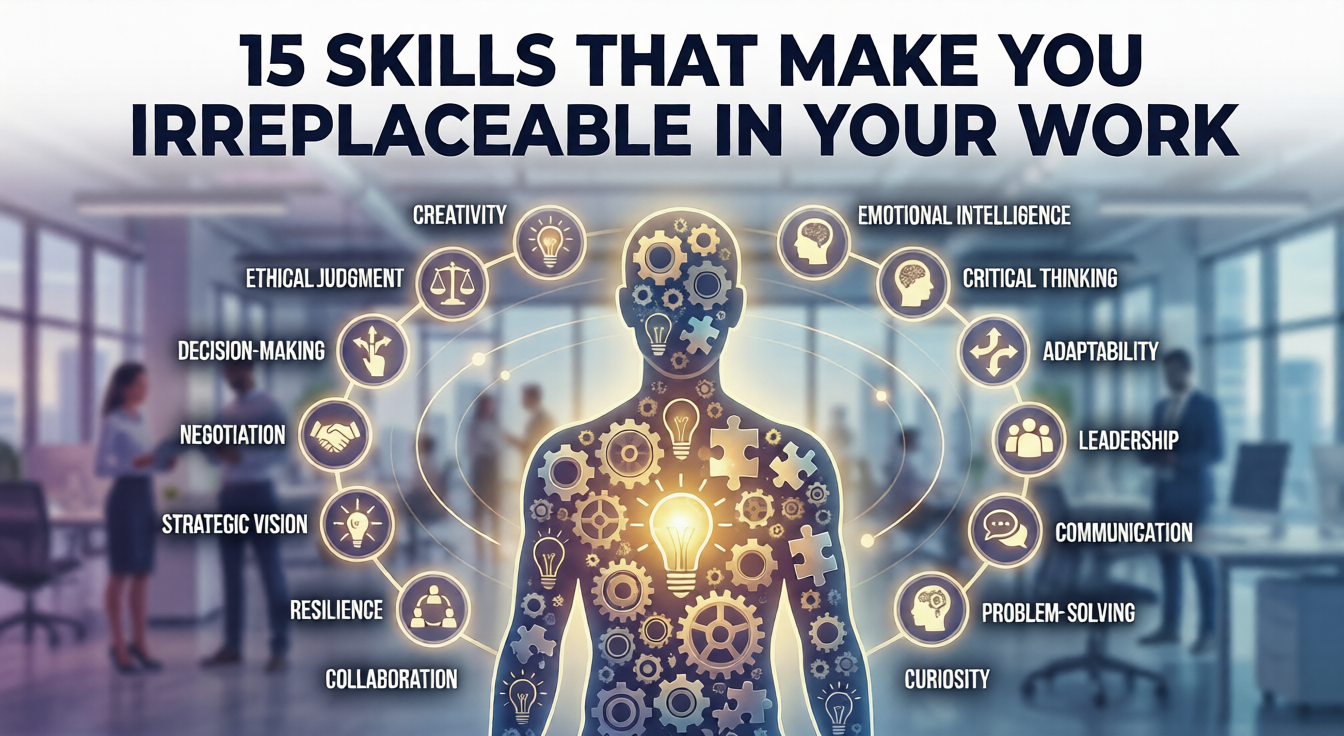
Introduction
I’ll never forget the sinking feeling I had three years ago when my colleague Sarah got promoted over me—for the third time. We had the same degree, similar experience, and honestly? I worked longer hours. But here’s what I didn’t understand then: being good at your job isn’t the same as being irreplaceable.
Sarah wasn’t just competent. She had this magnetic quality that made people need her on their teams. When budgets got tight, she was the last person anyone would dream of letting go. Meanwhile, I was sweating every quarterly review, wondering if I’d made enough of an impact to justify my desk space. The job market felt brutal, and I felt… expendable.
That wake-up call led me down a rabbit hole of figuring out what actually makes someone indispensable. And here’s the thing: it’s not about being the smartest person in the room or having the fanciest credentials. It’s about cultivating specific skills that make you the person everyone wants to keep around. These 15 skills are your secret weapon—the difference between being “just another employee” and becoming someone your organization literally can’t afford to lose.
The 15 Skills That Set You Apart
1. Problem-Solving Under Pressure
Picture this: the client presentation is in two hours, the software crashes, and everyone’s looking around in panic. The irreplaceable person? They’re already mapping out Plan B while others are still processing what went wrong.
Why it matters: Companies don’t just need workers who can follow instructions—they need people who can navigate chaos. When you’re the calm in the storm, you become essential infrastructure.
Build it: Next time something goes sideways, resist the urge to freeze or complain. Instead, spend 60 seconds asking yourself, “What are three ways we could tackle this?” Train your brain to jump straight to solutions, and you’ll develop that problem-solver reflex everyone values.
2. Emotional Intelligence
My friend Marcus used to wonder why he kept getting passed over for leadership roles despite his technical brilliance. Then his manager pulled him aside: “You’re amazing at the work, but you make people feel small when they ask questions.” Ouch. But also? Gold.
Why it matters: Technical skills get you in the door, but emotional intelligence keeps you in the building. Being able to read the room, handle conflicts gracefully, and make people feel valued creates loyalty that outlasts any market downturn.
Build it: Start noticing how people react to you. Do they light up or shut down? Practice the 3-second pause before responding to difficult conversations. That tiny gap between stimulus and response is where emotional intelligence lives.
3. Translating Complex Ideas Simply
Ever sat through a presentation where someone clearly knows their stuff but you can’t understand a word they’re saying? The irreplaceable person is the one who can explain quantum physics using a coffee analogy.
Why it matters: If you can’t communicate your expertise in ways others understand, your value gets lost in translation. The bridge-builders between technical teams and leadership become absolutely critical.
Build it: Practice the “explain it to your grandma” test. Take something complex you work on and describe it to someone outside your field. If their eyes glaze over, simplify further. Bonus points: use stories and metaphors.
4. Adaptability
When the pandemic hit, some people fought every change tooth and nail. Others pivoted so smoothly they actually thrived. Guess which group became indispensable?
Why it matters: The only constant is change, and companies need people who won’t break every time the wind shifts direction. Adaptable employees are insurance policies against an uncertain future.
Build it: Say yes to one thing each month that makes you uncomfortable. Volunteer for the project using new software. Try the workflow change instead of resisting it. Flexibility is a muscle—you’ve got to exercise it.
5. Initiative and Self-Direction
Nobody forgets the person who spots a problem and fixes it before it becomes a crisis—without being asked. That’s the difference between someone who needs constant supervision and someone who makes their manager’s life easier.
Why it matters: Managers are drowning in decisions. When you can be trusted to identify what needs doing and just… do it, you free up their bandwidth. That’s priceless.
Build it: Look for the gaps. What’s broken? What’s inefficient? What’s everyone complaining about? Pick one small thing this week and solve it without fanfare. Document what you did so others can benefit.
6. Building Genuine Relationships
Your network isn’t just who you know—it’s who genuinely wants to help you succeed. I’ve seen average performers become untouchable because people across departments advocated for them.
Why it matters: When layoffs loom, the person who’s built real connections across teams has multiple advocates. You become woven into the fabric of the organization rather than being an isolated thread.
Build it: Have one non-work conversation with a colleague each week. Ask about their weekend, remember their kid’s name, offer to grab them coffee. Real relationships are built in tiny, consistent moments, not grand gestures.
7. Strategic Thinking
Anyone can execute tasks. The irreplaceable person asks, “Why are we doing this? Is there a better approach? How does this connect to our bigger goals?”
Why it matters: Tactical workers are replaceable. Strategic thinkers shape the direction of the company. When you understand the bigger picture and contribute to it, you become part of leadership thinking.
Build it: Before diving into any task, spend five minutes understanding the “why” behind it. In meetings, practice asking one strategic question: “How does this align with our quarterly objectives?” or “What outcome are we optimizing for?”
8. Teaching and Mentoring Others
The person who hoards knowledge eventually gets replaced. The person who multiplies their impact by making everyone around them better? That person becomes irreplaceable infrastructure.
Why it matters: When you’re great at teaching, you’re not just valuable—you’re a force multiplier. You make your entire team better, and that impact echoes far beyond your individual contribution.
Build it: Share what you know freely. When you figure out a better process, document it. When someone asks a question, take the extra minute to explain your thinking, not just the answer. Create a legacy that outlives any single project.
9. Dependability
Being brilliant 80% of the time doesn’t beat being reliably good 100% of the time. The person everyone knows they can count on becomes the backbone of any team.
Why it matters: Trust is the currency of the workplace. When people know you’ll deliver what you promise, when you promise it, you become the safe bet. And organizations cling to safe bets during uncertain times.
Build it: Under-promise and over-deliver. If you say you’ll have something done by Friday, have it ready Thursday. Build a reputation brick by brick through consistent follow-through, no matter how small the commitment.
10. Creative Problem-Solving
AI can handle the routine stuff now. What it can’t do? Think outside the box when conventional solutions fail. Human creativity is your competitive advantage.
Why it matters: In a world of automation, creative thinking is your moat. Companies need people who can generate novel solutions, spot unexpected connections, and innovate when the playbook doesn’t work.
Build it: Actively expose yourself to different fields and perspectives. Read outside your industry. When stuck on a problem, ask, “How would a chef/artist/athlete approach this?” Cross-pollination of ideas breeds creativity.
11. Data Literacy
You don’t need to be a data scientist, but understanding how to interpret data and make evidence-based decisions separates the amateurs from the indispensable.
Why it matters: “I think” carries less weight than “the data shows.” When you can back up your recommendations with solid analysis, you gain credibility and influence. Decision-makers lean on people who speak the language of data.
Build it: Start small. Learn basic Excel or Google Sheets. Follow one industry metric relevant to your role. Practice saying, “Let’s look at the numbers” instead of relying solely on gut instinct. You don’t need a PhD—just enough literacy to be dangerous.
12. Customer-Centric Mindset
Whether your “customer” is external clients or internal stakeholders, obsessing over their experience makes you invaluable. The person who truly understands customer pain points becomes the voice everyone listens to.
Why it matters: Companies live or die by customer satisfaction. When you deeply understand customer needs and advocate for them, you become the guardian of the company’s future revenue and reputation.
Build it: Actually talk to your customers or end users. Read their feedback. Spend time understanding their frustrations. Then, in every project, ask: “How does this improve their experience?” Make their voice heard in rooms where decisions get made.
13. Resilience and Positivity
Projects fail. Clients leave. Markets shift. The person who bounces back with a positive attitude becomes the emotional stabilizer the whole team needs.
Why it matters: Negativity spreads like wildfire and tanks morale. Resilient optimists create energy that carries teams through tough times. That cultural contribution makes you irreplaceable in ways that transcend your job description.
Build it: Practice reframing setbacks as learning opportunities out loud. When something goes wrong, give yourself 10 minutes to process, then publicly focus on the path forward. Your attitude is contagious—make it worth catching.
14. Continuous Learning
The skills that got you hired won’t keep you employed. The irreplaceable person is always leveling up, staying ahead of industry shifts, and bringing fresh perspectives.
Why it matters: In a rapidly changing world, yesterday’s expert becomes tomorrow’s dinosaur. Continuous learners stay relevant and bring competitive advantages to their organizations through cutting-edge knowledge.
Build it: Dedicate 30 minutes a week to learning something new in your field. Take one course per quarter. Follow industry thought leaders. Share interesting insights with your team. Make learning visible and infectious.
15. Ownership and Accountability
Blame-shifters are a dime a dozen. The person who says, “This was on me, and here’s how I’m fixing it” becomes someone leadership can trust with bigger responsibilities.
Why it matters: Accountability is rare enough to be valuable. When you own both successes and failures, you demonstrate the maturity organizations need in critical roles. Trust flows to those who take responsibility.
Build it: Next time something goes wrong, resist the urge to explain why it wasn’t your fault. Instead, say, “I take responsibility for this outcome. Here’s what I learned and how I’ll prevent it next time.” Watch how much respect you gain.
Conclusion
Here’s what I learned from watching Sarah succeed while I struggled: being irreplaceable isn’t about working harder or being smarter. It’s about intentionally developing the skills that make people think, “We can’t do this without them.”
Two years after my wake-up call, I’d transformed from expendable to essential. Not because I became a different person, but because I started building these skills one at a time. I focused on problem-solving first, then emotional intelligence, then strategic thinking. My promotion didn’t just happen—I engineered it by becoming genuinely indispensable.
The beauty of these skills? They’re all learnable. You don’t need fancy degrees or natural talent. You just need to be intentional about your growth. Start with one skill that resonates most with your current situation. Master it. Then move to the next. In six months, you’ll be amazed at how differently people treat you. In a year, you’ll be the person everyone wants on their team.
Which of these are you mastering first? Drop a comment below!
FAQs
Can I learn these skills quickly, or does it take years?
- Some skills like taking initiative or showing accountability can start making an impact immediately—like, this week
- Others like emotional intelligence or strategic thinking develop over months of consistent practice
- The good news? You don’t need to master all 15 at once. Pick 2-3 to focus on each quarter
- Even small improvements in these areas create noticeable differences in how people perceive your value
What if my job is super niche or technical—do these still apply?
- Absolutely! These skills transcend industry and role
- In fact, highly technical roles benefit most from skills like translating complex ideas simply and emotional intelligence
- Your technical expertise gets you in the door; these skills determine how high you rise and how secure you are
- The most indispensable people combine deep expertise with these human-centered skills
I’m an introvert—can I really build relationships and emotional intelligence?
- 100% yes! These aren’t about being the loudest person in the room
- Introverts often excel at emotional intelligence through deep listening and genuine one-on-one connections
- Focus on quality over quantity in relationships—a few deep connections beat dozens of shallow ones
- Some of the most influential people I know are introverts who’ve mastered these skills on their own terms
How do I know which skills to prioritize first?
- Ask yourself: “What feedback do I keep hearing?” That’s usually your biggest gap
- Talk to your manager: “What skill would make me most valuable to the team?”
- Consider your career goals: Want to lead? Prioritize emotional intelligence and strategic thinking. Want to be the go-to expert? Focus on teaching and problem-solving
- Start with the skill that feels most urgent for your current situation
What if I work in an organization that doesn’t value these skills?
- First, these skills make you valuable anywhere—they’re transferable to better opportunities
- Second, you might be surprised—sometimes companies don’t know they value something until someone demonstrates it
- Third, building these skills is career insurance for wherever you go next
- Worst case? You develop skills that make you attractive to organizations that do value them, opening doors to better fits